
Quick Answer
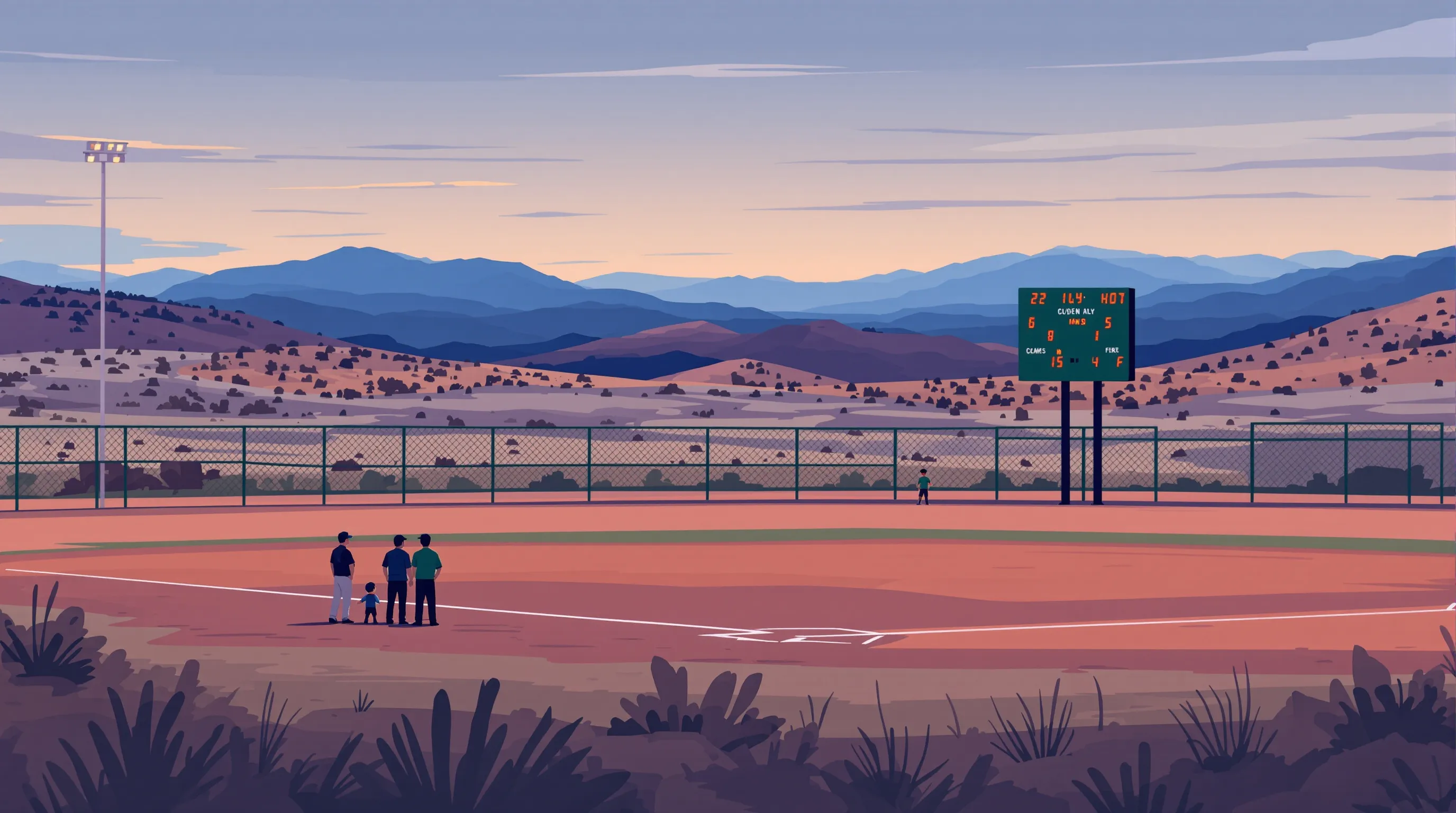
Baseball leads Idaho's record with 14 of 33 entries, and the outdoor LX1060 baseball and softball scoreboard, a 10 ft by 5 ft cabinet, is the most-shipped model at 6 records.
The LX1030 follows at 4. Basketball and football sit level at 8 each. Start with the rules your sport plays under. Then size the digit height for your farthest seat.
Key Points
- Our data from Electro-Mech's Idaho sales and shipping record shows baseball holding 14 of the 33 records across 20 cities and towns, with basketball and football at 8 each.
- The Idaho record puts the LX1060 first at 6 records and the LX1030 next at 4, and both models' spec sheets list 18-inch digits.
- Indoors, the LX2655 spec sheet lists reversible captions for volleyball or wrestling, and outdoors the LX7520 practice segment timer carries an internally mounted horn that marks each segment's end.
Idaho buyers ask a fair question: which scoreboards do schools and towns here actually order? The answer comes from Electro-Mech's own sales and shipping record, not from a survey or a catalog page. That record points outdoors, to the baseball field.
Five models make up the state's most-shipped list: the LX1060 and LX1030 on baseball fields, the LX2350 and LX2655 in gyms, and the LX7520 on football practice fields. Each is described here only from its own spec sheet. The cabinet sizes, digit heights and options you read belong to that model and no other.
You will also see what the record cannot tell you. It lists what shipped, to which city and when. It does not say why a scoreboard was bought or whether it still stands today.
From there the article turns practical. You will learn how to size a baseball scoreboard for your farthest seat, why a pitch count field matters on a field shared by more than one league, and what to send with a quote request so the configuration fits your rules from the first day.
If you are planning a scoreboard purchase in Idaho, start with baseball. Our data from Electro-Mech's Idaho sales and shipping record shows baseball holding 14 of the 33 records, spread across 20 cities and towns. Basketball and football sit level behind it at 8 records each. Soccer accounts for 2 and hockey for 1.
The model list points the same way. The LX1060, an outdoor baseball and softball scoreboard, leads the state's record at 6 entries, ahead of the LX1030 at 4. Both are fixed-digit outdoor baseball scoreboards. Neither is a video display.
The record tells you what shipped, not why it was bought. The sections below cover what each of Idaho's most-shipped models shows, how the LX1060 and LX1030 differ, how to size a baseball scoreboard for your farthest seat, and what to confirm before you request a quote.
What does Electro-Mech's Idaho sales and shipping record show?
Baseball leads Idaho with 14 of 33 records, spread across 20 cities and towns, while basketball and football sit level behind it at 8 records each.
Before you read the numbers, keep three points about how the record is built in mind:
- One row is one organization, one model and one city. The state page applies the same rule, so you can check every count against it.
- Variants fold into one model. A 2350, a 2350-C and an LX2350 all count as the LX2350.
- The record covers what was sold and shipped. If you need to know what stands at a particular site today, ask the organization that owns it.
Our data from the Idaho sales and shipping record places the state 42nd of 50 states by units shipped, with records running from 1999 to 2025. The snapshot behind these figures is dated September 14, 2026. By sport, the record breaks down as follows.
| Sport | Idaho records |
|---|---|
| Baseball | 14 |
| Basketball | 8 |
| Football | 8 |
| Soccer | 2 |
| Hockey | 1 |
The research section below walks through what these counts mean for where you start. Basketball and football tie for second. Soccer and hockey are a small remainder.
The record also lists 16 distinct models, and an outdoor baseball scoreboard heads that list. Our review of the LX1060 model page explains part of the appeal: Electro-Mech has always offered a 10 foot by 5 foot baseball model with a layout like the LX1060's, and the design traces back to the electro-mechanical scoreboards the company built in the 1960s.
A review of 2 sources, the state record and the LX1060 model page, points the same way. Idaho buyers have mostly ordered plain, readable baseball layouts. For you, that means the models later in this article are the ones your neighbors in the state actually received.
The record does not say why any organization bought what it did, and it names no organizations at all. You can compare each model's own figures in the Electro-Mech scoreboard manuals and spec sheets before you narrow a choice.
What does Idaho's scoreboard record say about where to start?
The scoreboard we shipped most often to Idaho addresses traces its layout to the electro-mechanical boards we made in the 1960s. Its nearest rival in our record has the same digit height.
Our Idaho record is a modest one. Idaho ranks 42nd of 50 states by units we have shipped. The record holds 33 entries across 20 cities and towns and runs from 1999 to 2025. Our Idaho installations page lists every entry by city, from Arco to Twin Falls, so you can check the count yourself. Baseball leads by a wide margin.
With numbers this small, we read them with care. The 33 records cover 16 distinct models, and a single record separates the third most-shipped model from the fifth. The five leaders show a pattern worth noticing, but the sample is too small to call it a trend.
| Model | Idaho records | Setting and sport | Cabinet | What its spec sheet highlights |
|---|---|---|---|---|
| LX1060 | 6 | Outdoor baseball / softball | 10 ft x 5 ft, 160 lb | 18-inch digits, 7-inch captions |
| LX1030 | 4 | Outdoor baseball / softball | 8 ft x 4 ft, 113 lb | 18-inch digits, 6-inch captions |
| LX2350 | 3 | Indoor basketball / multi-sport | 9 ft x 3 ft | 12-inch Points and Period Clock digits, Bonus and Possession indicators |
| LX7520 | 3 | Outdoor portable practice segment timer | 4 ft x 3 ft, 40 lb | 11-inch digits |
| LX2655 | 2 | Indoor basketball, volleyball / wrestling | 9 ft x 5 ft, 133 lb | Reversible captions for volleyball or wrestling |
The two leaders are both outdoor baseball and softball boards, and on paper they are close. Both spec sheets list 18-inch digits and 4-inch indicators. The cabinet is where they differ. The LX1060 is 2 ft wider, 1 ft taller and 47 lb heavier, and its captions are 7 inches tall where the LX1030's are 6. We have "always offered" a 10 ft by 5 ft baseball model with a layout like the LX1060's. The LX1030 sits between our LX1050 and LX1060 in size, and its model page says it has turned out "just right" for little leagues and high schools.
So the most common choice in our Idaho record came down to the cabinet. Digit height was the same either way. Our record cannot tell us why the LX1060 appears six times and the LX1030 four, and we won't guess.
Indoors, the spec sheets describe different jobs. The LX2350 is built around basketball scoring, with built-in Bonus and Possession indicators. The LX2655 is the board we call our most popular for basketball. Removable caption plates let a gym relabel its lower half for volleyball games or wrestling matches. The bonus display now follows the NFHS high school rule: team fouls reset at the end of each quarter, and two free throws are awarded for common fouls once the opponent commits five fouls in a quarter.
The practice field supplies the last of the five. The LX7520 ties the LX2350 at three records. Its spec sheet calls it a portable practice segment timer, and its model page says it can double as a play clock during actual games. That gives a single display a role at practice and on game night.
Lined up side by side, the five leaders read like a list of jobs: a line score for the diamond, bonus and possession for the gym, captions that turn the gym over to volleyball or wrestling, and a clock for practice. Size matters only at the top of the list, where two boards with identical digits differ in cabinet. Every one of these entries is a board sold and shipped to an Idaho address. The record doesn't show where each board was installed or whether it is still in use.
Four decisions to make first
- Name the job first: outdoor game scoring, a gym that hosts several sports, or practice timing.
- Weighing the LX1060 against the LX1030? Both spec sheets list 18-inch digits, so compare cabinet size, caption height and weight, and ask whether your mounting site suits a 160 lb or a 113 lb cabinet.
- For a gym, ask how the Bonus indicator will be run under the NFHS per-quarter foul count, and whether volleyball or wrestling on your schedule calls for reversible captions.
- If practice periods are timed by a coach's watch, a portable segment timer such as the LX7520 is a natural next step, and it can also serve as a play clock during games.
How we checked this
Every count here comes from our own sales and shipping record for Idaho (snapshot of September 14, 2026) and matches the totals printed on our public Idaho installations page, which we checked on October 31, 2026. Model details come only from each model's own page and spec sheet. The foul rule comes from the NFHS. Our record counts one row per organization, and it counts variants of a model under that model's LX number. It shows boards sold and shipped, but not where they were installed, whether they are still in use, or why buyers chose them. With 33 records, one order can change the ranking. We make and sell every board named here, so we have a clear stake in this story.
- Electro-Mech, Idaho scoreboard installations page, checked October 31, 2026.
- Electro-Mech, LX1060 model page and LX1060 spec sheet.
- Electro-Mech, LX1030 model page and LX1030 spec sheet.
- Electro-Mech, LX2350 model page and LX2350 spec sheet.
- Electro-Mech, LX2655 model page and LX2655 spec sheet.
- Electro-Mech, LX7520 model page and LX7520 spec sheet.
- NFHS, high school basketball free throw rule change, checked September 16, 2026.
How do the LX1060 and LX1030, Idaho's two most-shipped models, differ?
The LX1060, a 10 ft by 5 ft outdoor baseball scoreboard with 18-inch digits, leads Idaho's record at 6 records, ahead of the 8 ft by 4 ft LX1030 at 4.
Both are outdoor baseball and softball scoreboards, and both use the same digit and indicator sizes. The difference is the cabinet. Our data from the two spec sheets (Rev 2.0.2017.06.08) sets them side by side:
| Spec sheet figure | LX1060 | LX1030 |
|---|---|---|
| Idaho records | 6 | 4 |
| Cabinet dimensions | 10 ft x 5 ft | 8 ft x 4 ft |
| Weight | 160 lb | 113 lb |
| Digit height | 18 in | 18 in |
| Indicator size | 4 in | 4 in |
| Caption height | 7 in | 6 in |
| Digit colors | Amber or red | Amber or red |
| Electrical, base model | 1.1 A, 120 VAC | 1.1 A, 120 VAC |
| Electronic Team Names variant | LX1060-ETN, 2.4 A | Not listed on the spec sheet |
The LX1030 model page describes 18-inch Runs and Inning digits with bullet-style Ball, Strike and Out indicators, and calls the size "just right" for little leagues and high schools. The LX1060 page stresses three plain qualities: the digits are easy on the eyes, the single cabinet is easy to install, and the MM style console is easy to use.
Our review of the two standard equipment lists shows more in common than apart. Each ships with a simplified 15-key console, mounting hardware for two posts with no on-site fabrication, and a junction box with patch cable for hardwired use. Each offers ScoreLink Wireless RF, a full-sized 37-key console and up to 1,000 feet of data cable as options.
So the choice is mostly about cabinet size and weight. Measure the mounting site before you choose between the two.
Layout habits in baseball run deep. A 2022 r/baseball thread decoding a 1967 Cincinnati scoreboard noted that scoreboards from the 1950s to the early 1970s most closely resembled how baseball information looked in newspapers. The line score your fans read on either model follows that same tradition.
If your site also needs an indoor display, the basketball scoreboard lineup covers the gym models that appear in Idaho's record.
What should you read before choosing an Idaho scoreboard model?
Read the model's own spec sheet first. Idaho's record leans on a short list of models, so the LX1060 and LX2655 documents answer most of the questions a buyer brings.
A spec sheet is the faster read. Our data, from the LX1060 spec sheet (Rev 2.0.2017.06.08), lists a 7-inch caption height and 4-inch indicators on an outdoor baseball and softball cabinet with amber or red digits. The LX2655 spec sheet, same revision, describes an indoor basketball scoreboard with reversible captions for volleyball or wrestling and a choice of amber, red and green LEDs.
Each variant has its own sheet. The LX1060-ETN and LX2655-ETN each carry separate electrical figures, so read the sheet for the exact variant you plan to order. Then set it beside the pitch count rules your league publishes, or your gym's volleyball and wrestling calendar, and confirm each display you need is on the sheet.
Is a bigger baseball scoreboard always better for a school or community field?
Bigger is not automatically better. The right baseball scoreboard has a digit height that suits your farthest seat, and a larger digit always costs more.
The conventional wisdom from professional ballparks points the other way. A 2023 r/baseball thread on MLB scoreboard sizes captured it: a Dodgers fan asked whether there was "some kind of scoreboard cold war going on," since a board replaced only a decade earlier already ranked third smallest. In the same thread, another commenter found large scoreboards distracting to the in-person viewing experience.
A school or community field is a different job. A scoreboard's first duty is accurate information for players, umpires and coaches. Spectators come second.
Three questions settle size better than ambition does:
- How far is your farthest seat? The sign industry allows 50 feet of viewing distance per inch of lighted character height on signs. Electro-Mech recommends the tighter 25 feet per inch of digit height for scoreboards, because captions also have to be read.
- Which fields does the game require? Runs, inning, ball, strike and out are the core. A pitch count is a separate choice.
- What does the budget allow? Digit size and price move together, so the real risk is a scoreboard too small for the venue.
Electro-Mech's catalog does go well past the Idaho favorites. Our data from the LX1753 manual lists a cabinet of 26 ft by 9 ft at 800 lb, with a 15-inch line score and an 18-inch Pitch Count to 199. The LX1714 manual describes another permanent outdoor layout covering runs per inning, total runs, hits, errors, balls, strikes, outs and innings for both teams. Neither model appears among the five most-shipped models on the Idaho state card.
What Idaho's buyers ordered most often sits at the modest end of that range. Size followed need. The same viewing-distance arithmetic applies to soccer scoreboards on a shared field, so measure once and use the figure for every display you plan.
For you, the practical step is a tape measure, not a ranking of MLB parks. Measure your farthest seat before you compare models.
A quote request works best as a few plain lines. Name the model, the options and every rulebook the space hosts.
Gym model:      LX2655 (reversible volleyball / wrestling captions)
Gym options:    Electronic Team Names? Double Bonus Indicators?
Field rules:    state association pitch policy; Little League division(s)
Control:        ScoreLink Wireless RF or hardwired data cable
List each Little League division separately. Little League sets pitch counts by league age. The answer shapes the field you need.
Which basketball and football displays appear in Idaho's record, and what do they show?
Two indoor scoreboards, the LX2350 and LX2655, and one outdoor practice display, the LX7520, complete Idaho's five most-shipped models.
Check each model's spec sheet against the sport your gym or practice field hosts. The research section above walks through these findings.
LX2350
The LX2350 puts Guest Points, Home Points and the Period Clock in 12-inch digits, with a 9-inch Period digit. Built-in 3-inch Bonus and Possession indicators mark it as a basketball layout. The model page notes that its uncluttered face leaves room for sponsor ID panels.
LX2655
The model page calls the LX2655 Electro-Mech's most popular basketball model. Points and Period Clock are 12 inches, every other digit is 9 inches, and removable caption plates along the bottom relabel the lower half for volleyball or wrestling. A center-hung, four-sided version is also offered.
Foul display matters more since the rules changed. Since the 2023-24 season, NFHS Rule 4-8-1 awards two free throws once the opponent commits five fouls in a quarter, and team fouls reset each quarter. The one-and-one is gone. Both models carry Bonus indicators, and the LX2655 lists Double Bonus Indicators as an option, so confirm your operator follows the per-quarter count.
LX7520
The LX7520 is a practice segment timer display, used outdoors on the practice field. A practice segment timer is both a console operating mode and a separate display; the mode alone shows nothing. The LX7520 carries an internally mounted horn, ships with a full-sized 37-key console, takes an optional T-Cart leg kit with wheels, and can double as a play clock during games.
Football's 8 records include more than practice timers. The state card does not name the football game scoreboards, so this article does not guess at them.
What changes at football practice when an LX7520 segment timer is on the field?
The practice schedule stays the same, but the timekeeping moves from a coach's whistle to a display every group can see and hear across the field.
Take one outdoor football practice, run twice. Only the display changes.
| Moment in practice | Before: no segment display | After: an LX7520 on the field |
|---|---|---|
| End of a segment | A coach blows a whistle and calls the next drill. | The LX7520's internally mounted horn sounds, and every group sees the change at once. |
| Moving the display | Nothing to move. | The optional T-Cart leg kit rolls it to the drill area. |
| Game night | No extra display. | The same unit can double as a Play Clock. |
Coaches stop watching the time. They go back to coaching.
Which baseball scoreboards show pitch count and ball-strike displays, and what should an Idaho buyer check first?
Choose a baseball scoreboard whose fields match the rulebooks your field actually hosts: pitch count first, then balls, strikes and outs, sized for your farthest seat.
Pitch count is no longer a coaching preference. In 2016 NFHS revised Rule 6-2-6 so that each member state association develops its own pitching restriction policy, based on the number of pitches thrown in a game, with a required rest period between appearances. Idaho's limits therefore come from the state association rather than from NFHS. Confirm the current numbers with the association before you set up your season.
Youth play adds a second rulebook. Little League publishes pitch counts by league age, with days-of-rest thresholds for each division of play. A community field that hosts a high school team in spring and a Little League division in summer may work under both policies on the same scoreboard.
The pitch count field earns its place when a pitcher nears a threshold. A visible count lets the coach, the umpire and the scorekeeper read the same number at the same moment. I would put that field at the top of the list for any Idaho field shared by more than one league.
Before you request a quote, work through these five checks:
- Pitch count display. Ask whether the model carries a pitch count field and how high it counts. The LX1753 described earlier is one example.
- Ball, strike and out indicators. Confirm the layout, along with the inning display, matches how your league keeps score.
- Digit height. Size the digits to your farthest seat with the viewing-distance rule above, not to a neighboring field's scoreboard.
- Control method. Decide between wireless ScoreLink RF, which most customers choose, and a cabled console before any trench is dug.
- Configuration and quote. Price follows digit height and features, so ask the Electro-Mech team to quote the exact configuration you need.
For a small school or rec league on a tight budget, the affordable choice is the scoreboard that carries the fields you need at the digit height your seats require. Anything beyond that is optional. Fields you will never use add cost without adding information.
The research section above walks through these findings.
What should an Idaho buyer take away from the state's scoreboard record?
Treat the record as a starting list, not a recommendation. List every sport and league that will share the scoreboard, then check which rulebook each one plays under.
The pattern in the record is plain. The research section above walks through these findings. Your own list of fields, gyms and practice areas decides which part of that pattern applies to you.
I would treat the rulebook as the first line of the specification, ahead of cabinet size. A pitch count field, a bonus indicator that follows the current foul count and a horn at the end of each practice segment all serve how your teams already play. Size comes next.
Gather your sport, your farthest seat and your rulebooks. Then ask the Electro-Mech team for a quote.
Ready to match your next scoreboard to the rules your teams play under?
Send Electro-Mech your sport, your rulebooks and your farthest seat, and our team will quote a configuration built around them, from pitch count fields to per-quarter bonus indicators.
A gym scoreboard should follow the NFHS per-quarter foul count your officials use. A field scoreboard should carry the pitch count your league tracks. Tell us both.
Request a quote
Sources & Further Reading
Where can you check Electro-Mech's Idaho record for yourself?
Electro-Mech publishes its Idaho sales and shipping record by city on its own site, so you can see which models shipped where before you request a quote.
- Electro-Mech scoreboard installations in Idaho
- NFHS: Pitching Restriction Policies in Baseball to be Based on Pitches
- Little League: Regular Season Pitching Rules
- NFHS basketball rules: bonus free throws on the fifth team foul in each quarter (since 2023-24)
- r/baseball, What do the "P" and "1st" categories refer to on this old ...
- MLB teams' scoreboards ranked by size (2023 update) : r/baseball
Related Articles
- Baseball Scoreboards: Electro-Mech baseball scoreboards.
- Basketball Scoreboards: Electro-Mech basketball scoreboards.
- High School Football Scoreboards for Sale: football scoreboards for high schools.
- Timers and Counters: Electro-Mech timers and counters.
- Electronic Team Names: the Electronic Team Names option.
Summarize This Article With AI
Open this article in your preferred AI engine for an instant summary.
Frequently Asked Questions
What else do people ask about Idaho scoreboards?
Most questions cover who Electro-Mech sells to, what the Idaho record does and does not show, and how baseball scoreboards present pitcher information.
Does Electro-Mech sell scoreboards to schools in Idaho?
Yes. Founded in 1963 in Wrightsville, Georgia, Electro-Mech sells sport-specific and multi-sport displays, control systems and long-term support to schools, parks, colleges and sports venues across the United States. Idaho is one of those states. Contact the Electro-Mech team for a quote.
Does the Idaho record name the schools that bought scoreboards?
No. The state-level record lists models, sports and cities, not buyers. It shows what shipped and when, never why.
Can one LX1060 serve both baseball and softball?
Yes. Our data, from the LX1060 spec sheet, lists the model for baseball and softball. One field scoreboard covers both.
What did the "P" on old baseball scoreboards mean?
A 2022 r/baseball thread on a 1967 Cincinnati scoreboard explained it. The "P" showed the pitcher's number: the starter before the game, the current pitcher during it, and the winning or losing pitcher afterward. Pitcher information has long had a place on the scoreboard.
What is digit height?
Digit height is the height of each lighted numeral on a scoreboard face. Taller digits read from farther away. See the sizing section above for the viewing-distance rule.
Written by
Chap McMichael
Vice President of Support Services, Electro-Mech Scoreboard Company
Chap McMichael is Vice President of Support Services at Electro-Mech Scoreboard Company, the family-owned manufacturer that has built scoreboards in Wrightsville, Georgia since 1963.
Connect on LinkedIn