
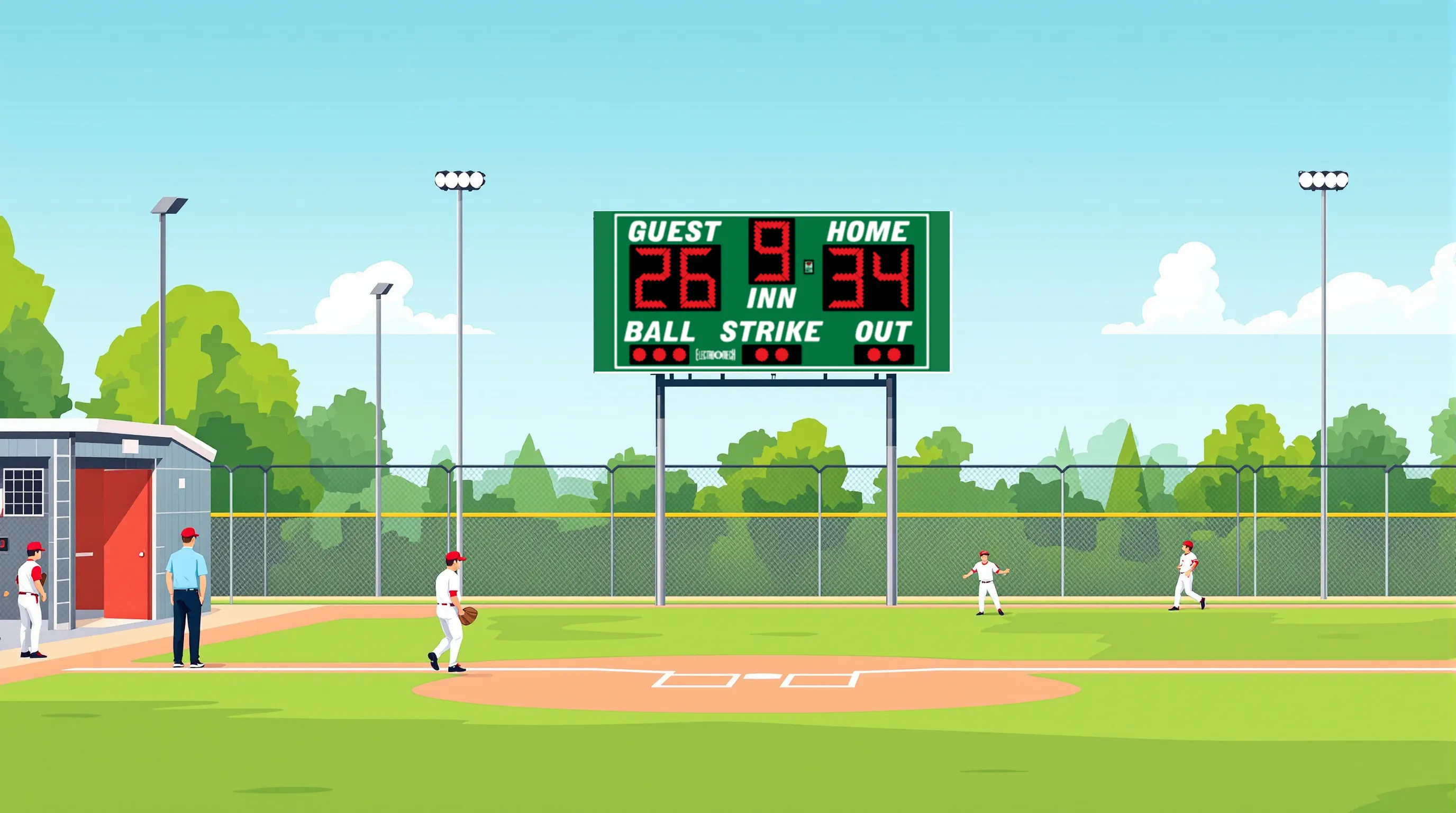
Baseball leads Kentucky's Electro-Mech sales and shipping record: 256 of 673 entries carry a baseball sport code, ahead of basketball at 245 and football at 116, across 137 Kentucky cities and towns. The sport code refers to the purchasing category attached at the time of order, not a technical description of what the scoreboard can display. Named buyers in the record include Campbellsville University, Belfry High School, and Barren County High School. Kentucky ranks tenth among all 50 states by total Electro-Mech shipping records.
Quick Answer
The short answer
The LX2350 leads Kentucky's Electro-Mech record with 81 entries; the LX2655 and LX1030 each follow at 43. Of 673 total Kentucky entries, 256 carry a baseball sport code (more than any other sport), and most buyers are in small communities, not Louisville or Lexington. The sport code reflects the purchasing category at order time, not a scoreboard capability limit.
Quick Answer
Electro-Mech's Kentucky sales and shipping record is a direct account of what the company built and shipped to Kentucky addresses: not a census of what currently stands on a field, not an installation registry, and not a ranking of programs by spend. Reading it correctly means understanding three conventions that govern every row.
First, each row represents one organization-model combination with a sport code attached at order time. The sport code refers to the purchasing category the buyer selected (baseball, basketball, or football), not a technical limit on the scoreboard itself. Second, the LX2655, Kentucky's second-most-ordered basketball-coded model, illustrates a related rule: model variants appear as separate rows in the record. An LX2655 and an LX2655-C at the same organization are two distinct order lines. Third, the city on each row is the shipping address, not the confirmed installation location.
These three conventions govern every entry in the Kentucky record. They matter because a reader who misinterprets a sport code or a city can draw conclusions the data does not support. I have seen organizations surprised to find their own entry listed under a city that is not their primary campus. It is simply where Electro-Mech shipped the order.
With those conventions established, the Kentucky record is a rich and specific dataset covering 26 years of scoreboard purchasing decisions across the state.
What Does Electro-Mech's Kentucky Sales and Shipping Record Actually Show?
Kentucky's Electro-Mech sales and shipping record holds 673 entries across 137 cities and towns, with baseball leading at 256 records, basketball at 245, football at 116, and other sports at 56.
Before drawing conclusions from those numbers, it helps to understand what a record entry actually represents. Our sales and shipping records show one row per organization-model-sport-code combination. The sport code attached to each row is an order-line label (the purchasing category the buyer chose), not a technical description of the scoreboard itself. An organization that bought a baseball scoreboard and later a basketball scoreboard appears on two separate rows. Kentucky's 673 entries, therefore, count distinct purchasing events, not distinct physical locations, as of .
Baseball's lead is real, but narrower than Kentucky's cultural reputation for the sport might suggest. Eleven records separate baseball from basketball. Football trails both by a wider margin (116 entries versus 256 for baseball), even though high school football in Kentucky draws substantial community attention. An analysis of 673 Kentucky shipping records shows that baseball accounts for more than one in three entries, a pattern more likely explained by the prevalence of outdoor baseball-only fields that still lack any lighted scoring display than by any category dominance. A baseball display carries balls, strikes, outs and an inning-by-inning line score, which is a good deal more than a shared multi-sport unit is built to show. That complexity is what pushes programs toward a dedicated baseball scoreboard.
Kentucky's record goes back to 1999, and it mixes model generations: older rows carry model strings without the LX prefix, newer ones carry LX models. Most of the older entries were baseball and basketball scoreboards ordered by small-school districts and recreation departments in towns outside Louisville and Lexington.
The record covers 137 cities. That figure matters. It means Kentucky's shipping history is broadly distributed (not concentrated in a handful of large metro areas), and that small communities have been the consistent buyers across 26 years. Electro-Mech ranks Kentucky tenth nationally by total records, ahead of states with larger populations. Small-town programs, not large-district procurement offices, have shaped the Kentucky record more than anything else.
A sport code is what the buyer chose to call the purchase, not what the scoreboard can or cannot do. Keeping that distinction in mind clarifies the record without changing it.
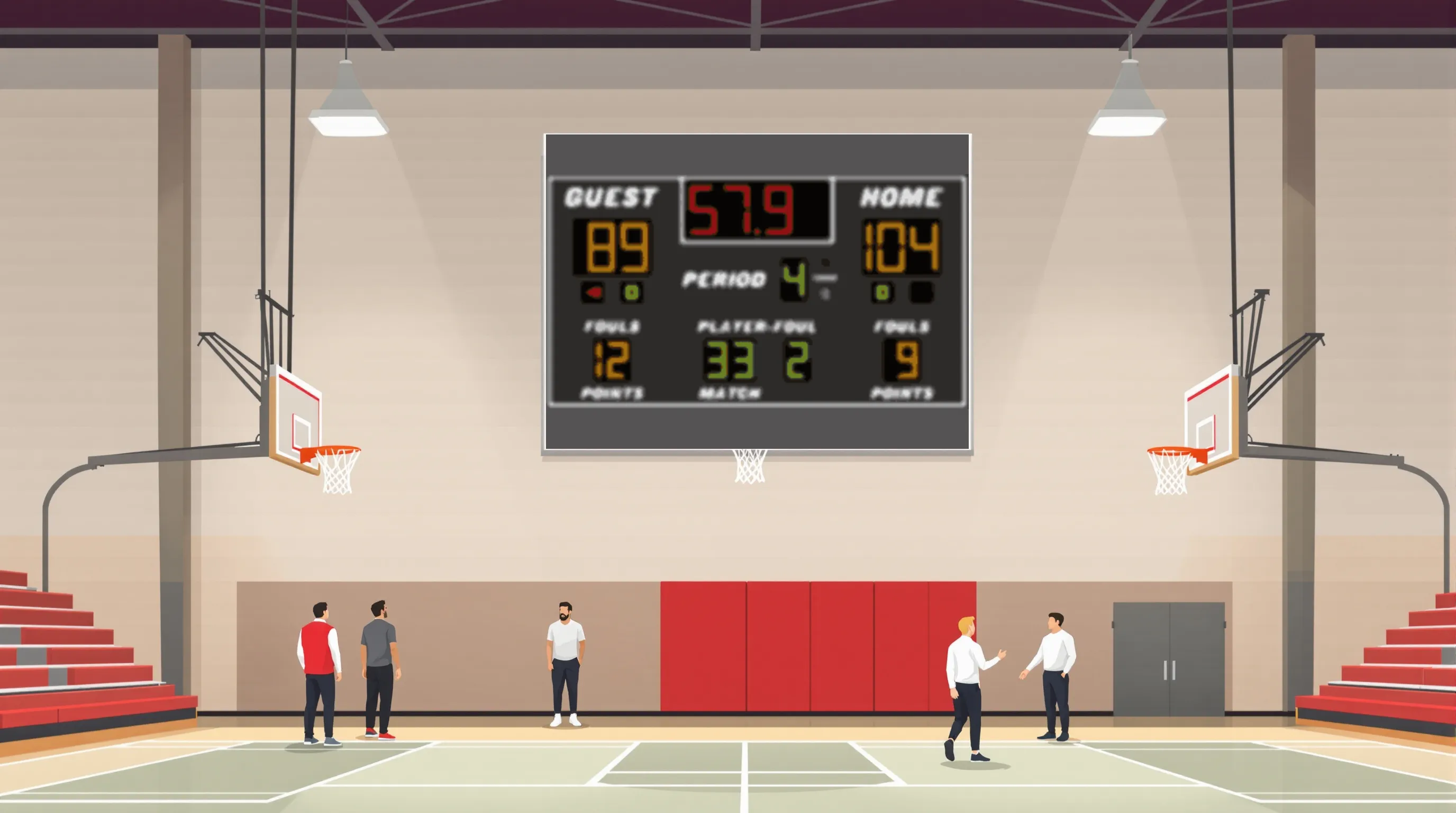
Why Does a Baseball Scoreboard Require More Display Zones Than a Basketball or Football Unit?
The LX1633 baseball scoreboard runs 22 feet wide and 6.5 feet tall, because baseball scoring carries more distinct data categories than any other sport in Kentucky's record.
A baseball scoreboard carries more scoring fields than any other sport we build for, which is why baseball buyers arrive with the longest list of questions. What a particular league or association asks a scoreboard to display is set by that body, not by us, and it is worth confirming with them before a configuration is locked. What we can speak to is the equipment: which fields a given model shows, what digit heights it uses, and how it is read from the far end of the field.
Those requirements add up to display zones that a football or basketball scoreboard does not carry. A basketball scoreboard needs a game clock, period, team scores, team fouls, and a shot clock (six to eight data fields in a compact cabinet). A baseball scoreboard, by contrast, needs ball count, strike count, out count, a pitch count, individual inning scores for up to nine innings, and run/hit/error totals for both teams. The LX1633 handles all of those in a single aluminum cabinet. Our spec sheet for the LX1633 shows two different digit heights within one unit: 15-inch digit rows carry the runs, hits, errors, and by-inning line score; 18-inch digit rows carry the ball, strike, out, and pitch count indicators. Cabinet dimensions are 22 feet wide, 6.5 feet tall, and 6 inches deep, at 450 pounds, substantially larger than most indoor basketball scoreboards.
In practice, that footprint means a baseball scoreboard purchase is rarely casual. The physical scope of the display, the outdoor installation requirements, and the sport-specific digit layout make it a deliberate choice. Kentucky's 256 baseball-coded entries reflect sustained, purposeful investment in outdoor scoring infrastructure across 137 cities. A program that placed an order chose a category knowing the size and complexity involved.
The sport code on an order line labels the purchase. The LX1633's specifications (two digit sizes, nine-inning line score, pitch count row, 22-foot-wide aluminum cabinet) explain why a baseball scoreboard is its own category rather than a variation on a multi-sport unit.
How Does an LX-Series Baseball Scoreboard Actually Work at a Kentucky Field?
An Electro-Mech LX-series baseball scoreboard keeps and displays accurate information for players and officials: balls, strikes, outs, pitch count, and a by-inning line score, using fixed LED digits mounted in an all-aluminum outdoor cabinet on two steel posts set in concrete footings behind the outfield boundary.
The operator uses a portable control console, typically connected wirelessly via ScoreLink RF, to enter information during the game. No video feed is required. The display shows only the data the operator enters, and the scoreboard itself does not process statistics automatically. For a small Kentucky program evaluating its first outdoor baseball scoreboard, that simplicity is the point: the display shows what needs to be shown, it lasts, and it does not require a staff technician to operate.
What Kind of Baseball Scoreboard Does a Small Kentucky Program Actually Buy?
The LX1373 draws 2.0 amps at 120 VAC, uses amber or red LED digits at 18-inch height, and is built for permanent outdoor installation at a baseball field with all-aluminum construction.
According to reporting on major college athletic facility spending, large university programs have shifted resources toward high-resolution video displays with animated scoreboards, real-time statistics feeds, and sponsor advertising capabilities. That trend is real at programs with the infrastructure to support it. What it does not describe is the market for a Kentucky high school or recreation program replacing a worn-out baseball scoreboard on a municipal or school-owned field. Those buyers are not choosing between a fixed-digit scoreboard and a video board. They are asking whether a permanent outdoor display with 18-inch digit height, conformal-coated electronics, and a five-year warranty will serve their field for twenty years. The LX1373 is designed to answer that question.
The construction details matter for a Kentucky installation. All-aluminum rust-free construction with heavy-duty extruded framing holds the cabinet through summer heat and winter freeze-thaw cycles without corroding. Automotive-grade baked enamel paint is the same surface treatment used on vehicle exteriors, selected because a scoreboard sits outdoors year-round and must maintain its finish without regular refinishing. Conformal-coated LED circuits protect the electronics from moisture at the component level. The minimum digit height on an Electro-Mech outdoor scoreboard is 11 inches; the LX1373 spec sheet puts this model's digits at 18 inches, which is what the rule of 25 feet of viewing distance per inch asks for at a field where the farthest seat sits 400 feet out.
In practice, fixed-digit scoreboards are the right tool for most of Kentucky's 256 baseball-coded orders, because most of those programs are running a one or two-field operation where reliable scoring is the priority. The sport code on each entry is an order-line label: a purchasing category, not a document of what alternatives were evaluated. A program choosing a fixed-digit scoreboard chose it because it fits the field and serves the purpose. What this means for anyone reading the record is that the 256 entries represent deliberate, function-first decisions spread across small towns throughout the state.
Kentucky's record does not show a scoreboard market in transition. Fixed-digit outdoor baseball scoreboards have been the consistent purchase for high schools, recreation departments, and small colleges in this state for 26 years.
Reading a Kentucky record entry: Each row in our sales and shipping records carries four key fields: organization, model, city (shipping address), and sport code. The sport code is a purchasing label set at the time of order, not a technical specification of what the scoreboard displays. The city field names the ship-to address, not the confirmed installation location. Variants (for example LX2655 and LX2655-C) appear as separate rows.
| Field | What it means | What it does NOT mean |
|---|---|---|
| Organization | The buyer of record | The venue or field where the scoreboard went |
| Model | The scoreboard shipped | Confirmation that no other model was ever purchased |
| City | The shipping address | The install location |
| Sport code | Purchasing category (baseball, basketball, football) | A technical limit on what the scoreboard can show |
Where in Kentucky Does Electro-Mech's Shipping Record Actually Sit?
Electro-Mech's Kentucky record covers 137 distinct cities and towns, with most entries concentrated in smaller communities well outside Louisville and Lexington.
That distribution is the clearest signal in the data. Large metro areas (Louisville and Lexington combined) account for a modest portion of Kentucky's 673 entries. The rest sit in smaller cities, county seats, and rural communities scattered across the state. Corbin, a city of roughly 7,000 in Knox and Whitley counties, appears multiple times in the record: our LX3680 football scoreboard data shows five Corbin entries in a state total of 12 LX3680 records, making it one of the more concentrated clusters in the Kentucky record. For a community its size, that is a meaningful share of the state's outdoor football scoreboard orders.
One important reading note for anyone looking up a city in the record: the city listed on each row is the shipping address, not a confirmed installation address. A school district's central office, a park-and-recreation facility, or a dealer location can all appear as the shipping destination. The record documents where a scoreboard was shipped, not where it currently stands or where it was installed. In practice, most shipments reach the end buyer directly, but the distinction matters when a city shows up repeatedly: it may reflect a concentration of buyers in that community, or it may reflect a logistical address shared across multiple organizations in the region.
The five most common models in Kentucky's shipping record, by entry count, are:
| Model | Kentucky Entries | Primary Sport Code |
|---|---|---|
| LX2350 | 81 | Basketball |
| LX2655 | 43 | Basketball |
| LX1030 | 43 | Baseball |
| LX1060 | 39 | Baseball |
| LX2665 | 39 | Basketball |
The LX2350 leads the state record by a wide margin. It is a basketball scoreboard model, which reflects the scale of indoor gymnasium infrastructure across Kentucky's high schools and recreation centers. The LX1030 and LX1060, both baseball-coded, together account for 82 entries, putting the two primary baseball models well behind the LX2350 but ahead of many other individual units in the catalog.
The takeaway from the geography is simple. Kentucky's scoreboard record is a record of small communities investing in outdoor and indoor scoring displays, not a record of large programs upgrading facilities. Corbin's five football scoreboard entries in a town of 7,000 tell that story as clearly as any statewide summary.
Common misreading
"The sport code tells me this scoreboard is for baseball only. The city in the record is where the scoreboard is installed. If I see the same city twice, that's one building with two scoreboards."
What the record actually shows
The sport code is a purchasing label: the category the buyer chose at order time, not a technical limit on what the unit can display. The city is the shipping address, which may be a district office or dealer, not a field. Two entries with the same city and organization usually mean two separate purchases, possibly years apart, for different locations.
What Should a Kentucky High School Look for in an Outdoor Football Scoreboard?
For a high school stadium, the practical starting point is digit height: Electro-Mech recommends 25 feet of viewing distance per inch of digit height because a football scoreboard must carry readable captions alongside the score.
The sport code on an Electro-Mech order line is a purchasing label, not a fixed description of what a scoreboard can or cannot do. Kentucky programs ordering a football-coded scoreboard are buying a display configured for game clock, down, quarter, team scores, and the horn that marks the end of a period. That configuration drives the digit count, the cabinet size, and the control console programming, and it is distinct from what a baseball or basketball scoreboard carries. Choosing the right sport code is the first practical decision, and the 116 football-coded entries in Kentucky's record show that high schools and recreation programs across the state have made it consistently over 26 years.
The LX3680 is the outdoor football scoreboard in Kentucky's record with the most entries. All 12 Kentucky LX3680 records carry a football sport code, and the model shipped to programs across the state from 2011 through 2025. For a school stadium with a farthest seat at 400 feet or more (typical for a high school facility), digit height on the game clock and team scores needs to be large enough to maintain legibility at that distance. The Electro-Mech rule of 25 feet per inch of digit height sets the floor, not the ceiling.
Outdoor football scoreboards also require weather-hardened construction for permanent outdoor installation. The same conformal-coated circuit boards and all-aluminum cabinets that protect baseball scoreboards apply here. A football scoreboard operates through the full regular season, from August heat into November cold, without a controlled indoor environment. In my experience supporting Kentucky programs, that durability factor consistently comes up early in the conversation. An athletic director replacing a scoreboard that failed prematurely knows exactly what to ask for next time.
The practical checklist for an outdoor football scoreboard comes down to three questions: Is the digit height adequate for the farthest seat in the stadium? Does the display carry every scoring zone the game requires (clock, down, quarter, scores, and timeouts)? And is the cabinet designed for permanent outdoor installation year-round?
The takeaway from Kentucky's football record is straightforward. These programs chose a dedicated outdoor football scoreboard with consistent specifications. They did not compromise on sport-specific configuration because the record is clear: a football-coded order gets a football display built for the game.
Questions This Article Answers
- What does Kentucky's Electro-Mech sales and shipping record actually show?
- Why does baseball lead the Kentucky scoreboard record over basketball and football?
- What do sport codes mean in Electro-Mech's shipping records?
- Where in Kentucky does Electro-Mech ship the most scoreboards?
- What should a small Kentucky program look for in an outdoor baseball scoreboard?
Frequently Asked Questions About Kentucky Scoreboards
What does the sport code in Electro-Mech's record mean for my program?
The sport code is the purchasing category attached to an order at the time of sale. It reflects what the buyer specified at checkout, not a technical capability limit on the scoreboard. A unit sold under a baseball code can be configured to display whatever the control console is set up for.
Why does my school appear under a city we do not use as our primary address?
The city on each row is the shipping address Electro-Mech used when delivering the order. If a district office or contractor gave a different delivery address, that address is what the record reflects, not the location where the scoreboard was eventually installed.
Why does our organization show up more than once in the record?
Each row represents one model-organization combination. If your program purchased an LX2655 and later an LX2655-C, both appear as separate lines. Orders placed years apart each generate their own row, even for the same organization. Duplicate entries are not errors; they are accurate history.
Does Kentucky's baseball-heavy record reflect what most programs buy nationally?
Kentucky's baseball-first pattern is somewhat specific to this state. Programs inquiring nationally more often ask about football stadium scoreboards and multi-sport gym setups. Kentucky's distribution reflects local purchasing decisions, including a significant share of small schools and community programs that prioritize outdoor baseball fields.
Key Takeaways
Key takeaways
- The sport code on each record row is the purchasing category at order time, not a capability limit on the scoreboard itself.
- The city listed is the shipping address, not the confirmed installation location.
- Duplicate entries for the same organization reflect separate orders, not data errors.
- Baseball leads Kentucky's record at 256 of 673 entries; the LX2350 is the most ordered model in the state at 81 entries.
- Most Kentucky entries sit in small communities, not in Louisville or Lexington.
Kentucky's 673 sales and shipping records make one thing clear. Most programs here are not deciding between a fixed-digit scoreboard and a video display. They are deciding between a scoreboard and nothing at all.
Baseball's 256 entries lead the state record. Basketball follows at 245 entries; football at 116. The sport codes shift across programs, but the underlying pattern holds: buyers are in smaller cities and towns, choosing practical, permanent displays over premium-tier equipment. The reading conventions that govern every row in this record (sport code as order-line category, city as shipping address, each model variant as its own line) apply equally to the LX2655 basketball scoreboard, the LX3680 football scoreboard, and the baseball scoreboard that arrived at a Campbellsville University diamond or a small high school field in eastern Kentucky.
Every Kentucky program that has placed an order is already in this record. For programs that have not, the record itself is a reasonable baseline for what comparable programs have selected, and a conversation with the Electro-Mech support team is the straightforward next step.
Related Articles
Written by
Chap McMichael
Vice President of Support Services, Electro-Mech Scoreboard Company
Chap McMichael is Vice President of Support Services at Electro-Mech Scoreboard Company, the family-owned manufacturer that has built scoreboards in Wrightsville, Georgia since 1963.
Connect on LinkedInSummarize This Article With AI
Open this article in your preferred AI engine for an instant summary.