
Football Scoreboards
|
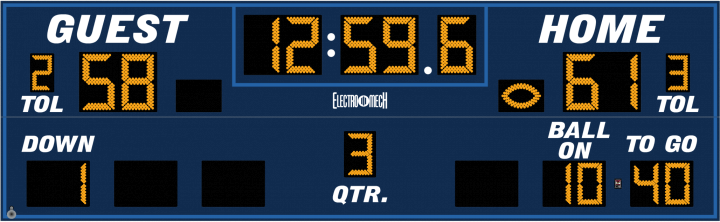
Victory on the Football field is no small accomplishment. While the post-game celebration may include travel plans to a certain mouse-themed vacation area, [Continue reading...] |

Full-Featured Football Scoreboards
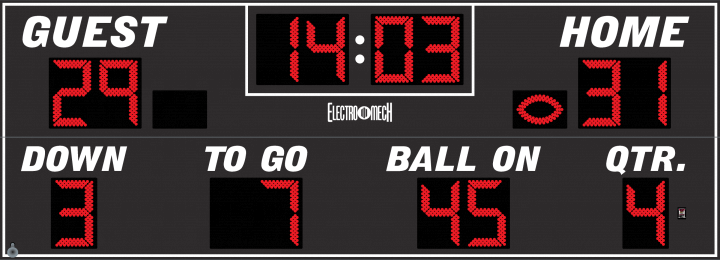
Our largest displays featuring all of the traditional Football stats, including Timeouts Left (TOL)
 LX3620 SERIES
18 ft x 5 ft
LX3620 SERIES
18 ft x 5 ft
Two compact Football scoreboards with complete feature sets
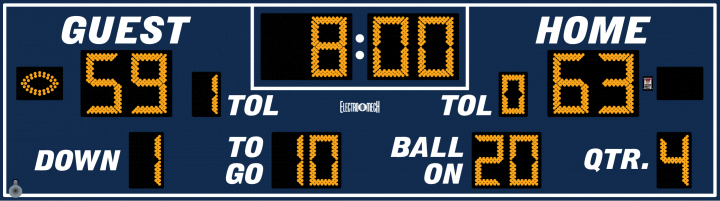
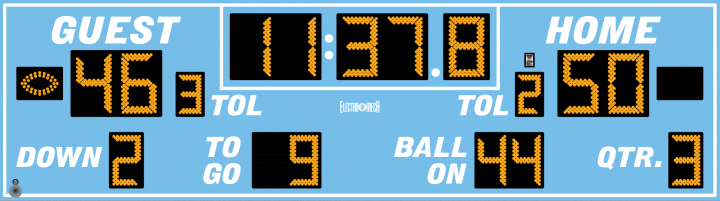
Model LX3630 20 ft x 8 ft
A huge set of Football scoring features packed into a smaller cabinet
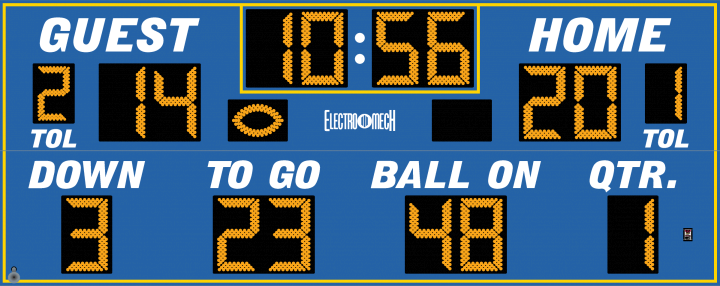
LX3640 SERIES
24 ft x 8 ft
The perfect scoring solution for a winning high school Football team
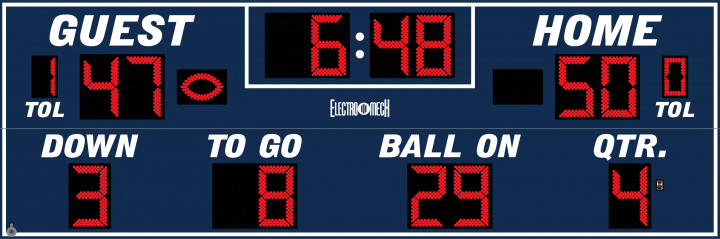
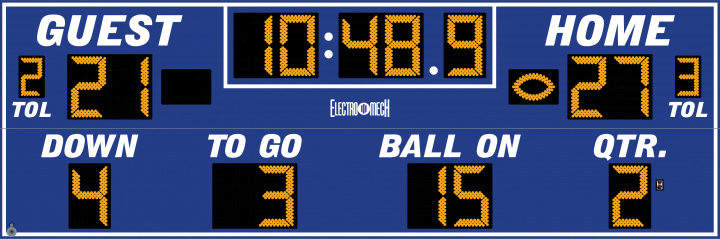
LX3650 SERIES
26 ft x 8 ft
The 30-inch tall Period Clocks in these 26 ft. x 8 ft. scoreboards set them apart.
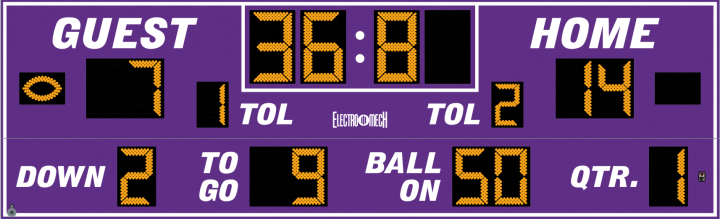
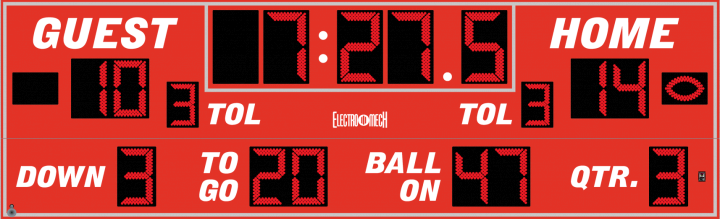
LX3680 SERIES
24 ft x 10 ft
At 24 ft. x 10 ft., these Football scoreboards are big enough for all but the largest stadiums.
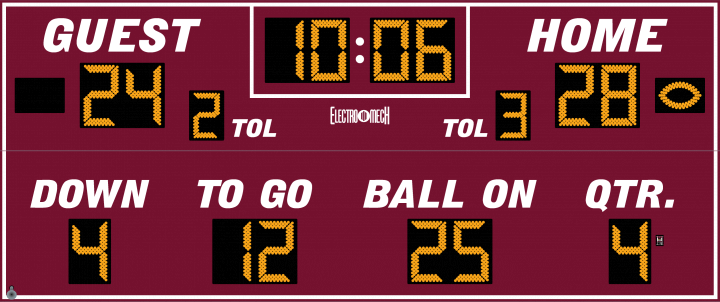
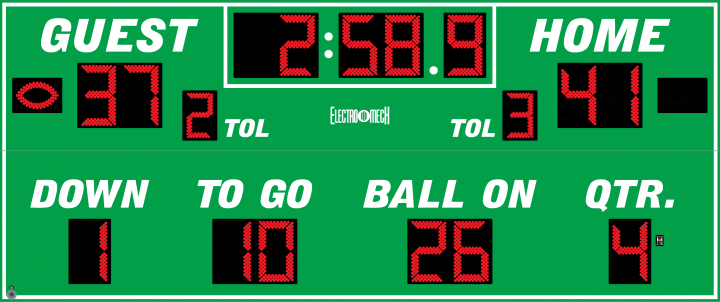
LX3690 SERIES
26 ft x 10 ft
The 30-inch tall Period Clock digits top the list of outstanding features in these 26 ft. x 10 ft. Football scoreboards.
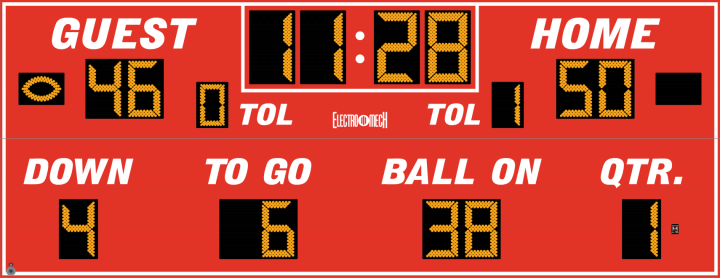
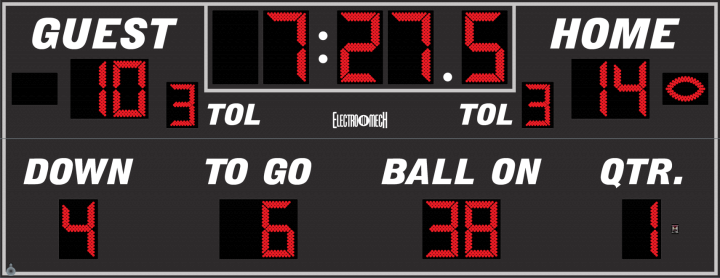
LX3740 SERIES
32 ft x 8 ft
No feature is missing from these 32 ft. x 8 ft. Football scoreboards.
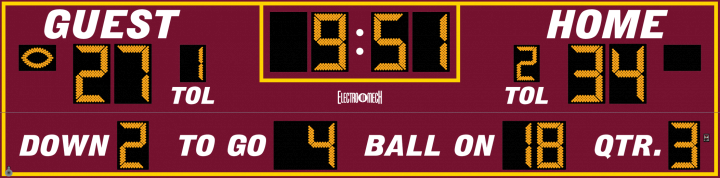
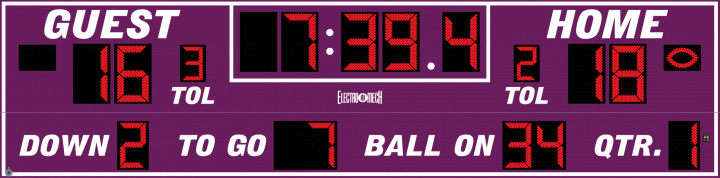
LX3780 SERIES
32 ft x 10 ft
These large Football scoreboards bring together all the crucial game information as well as extra touches like Time Outs Left and Possession Indicators.
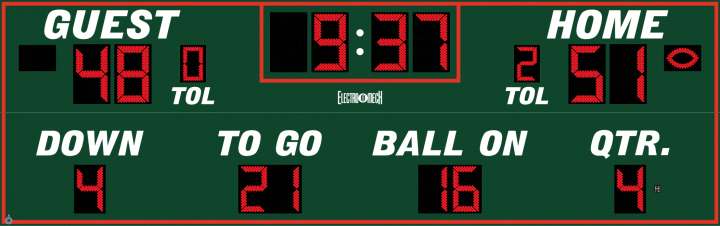
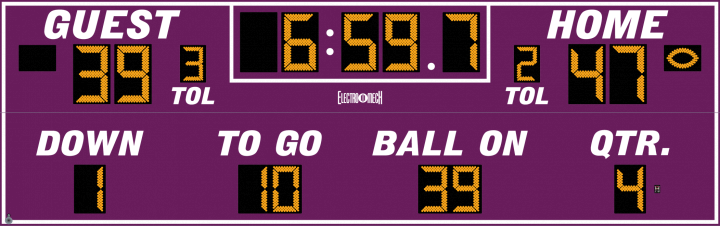
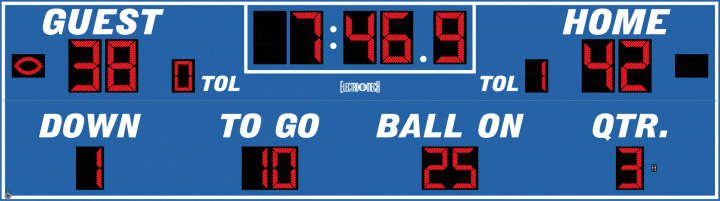
LX3840 SERIES
36 ft x 8 ft
Football scoreboards big enough for a professional stadium
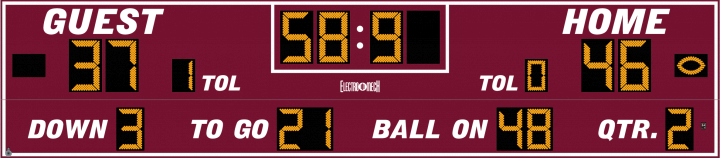
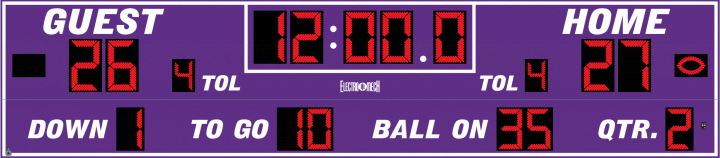
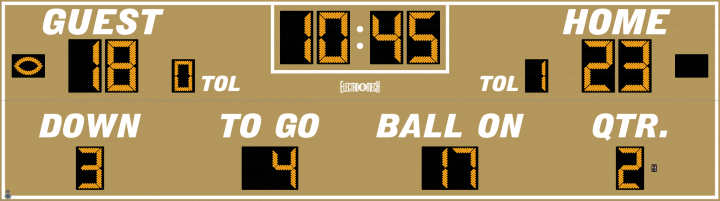
LX3880 SERIES
36 ft x 10 ft
Our largest standard Football scoreboards
Basic Football Scoreboards
Mid-range displays featuring most traditional Football stats
Model LX3230 14 ft x 5 ft
The LX3230 includes our feature-packed "MP" console.
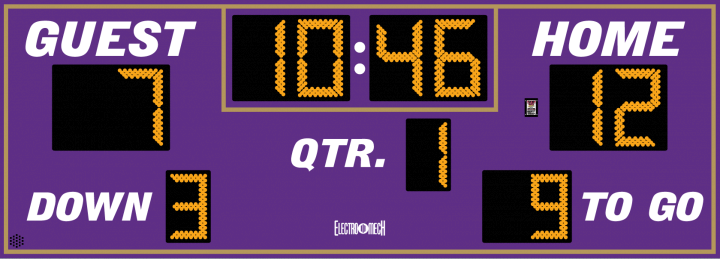
Model LX3250 16 ft x 8 ft
The LX3250 is a workhorse of a Football scoreboard.
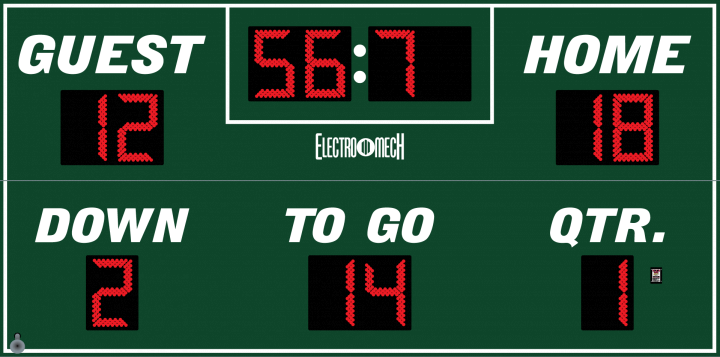
LX3320 SERIES
16 ft x 6 ft
Big on features and easy on the budget
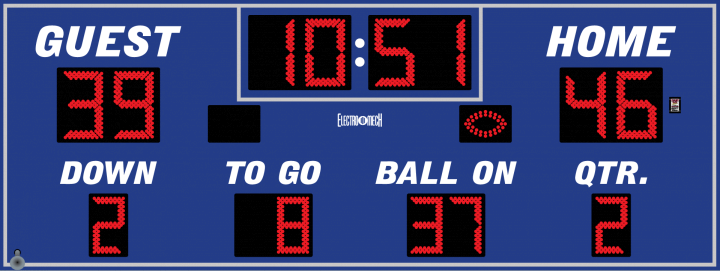
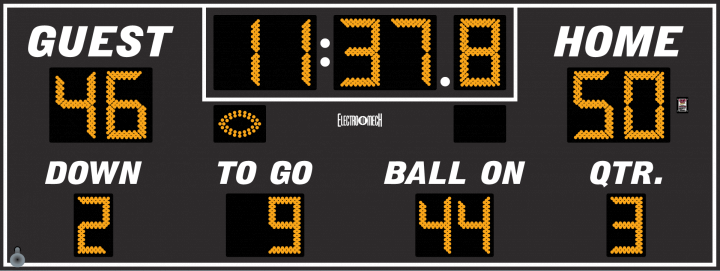
Model LX3340 18 ft x 8 ft
Big 24-inch tall digits in a smaller (18 ft x 8 ft) package
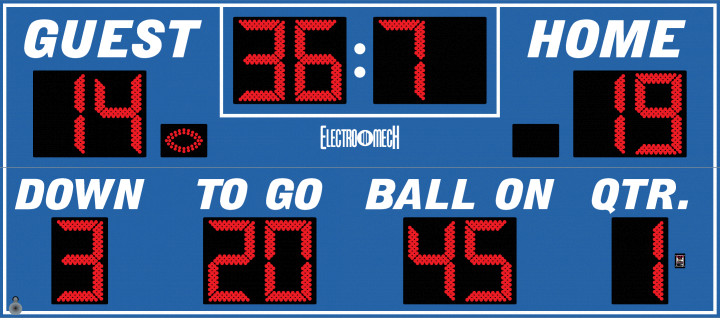
LX3360 SERIES
22 ft x 8 ft
The wider cabinets on these two scoreboards give plenty of breathing room for the 24-inch tall LED displays.
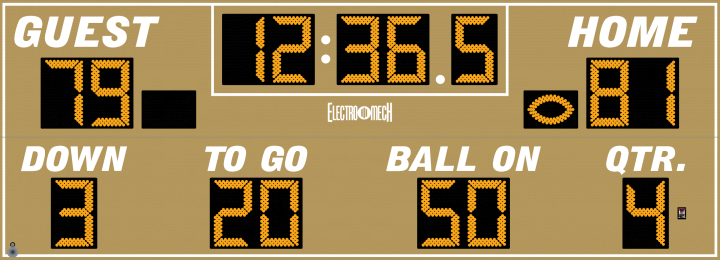
Compact Football Scoreboards
Small displays featuring basic Football stats -- for tight spaces and budgets!
Model LX3120 5 ft x 3-1/2 ft
Model LX3120 is the Football scoreboard that is both simple and portable.
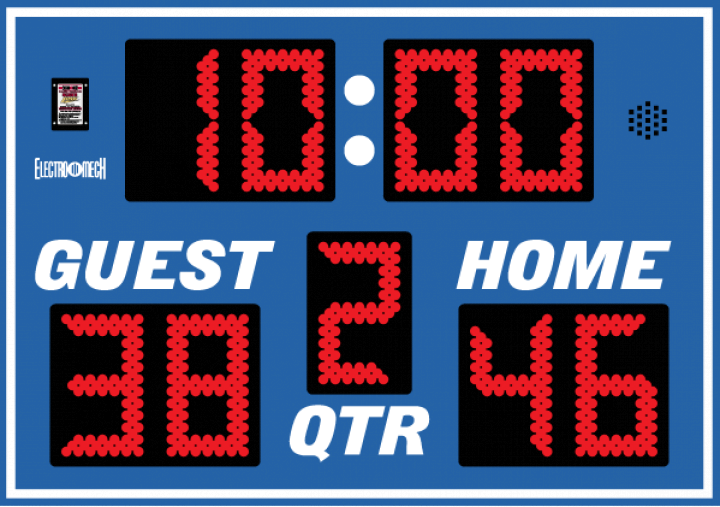
Model LX3130 10 ft x 3 ft
Model LX3130 gets Football back to the basics.
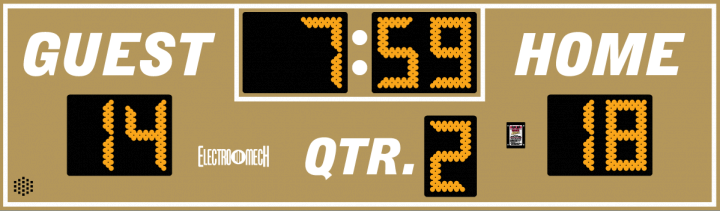
Model LX3140 10 ft x 5 ft
The LX3140 is the simple answer for scoring Football.
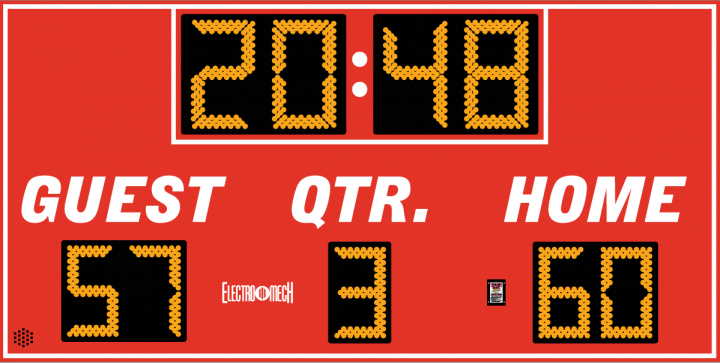
Model LX3150 10 ft x 5 ft
Model LX3150 includes big Football features in a small space.
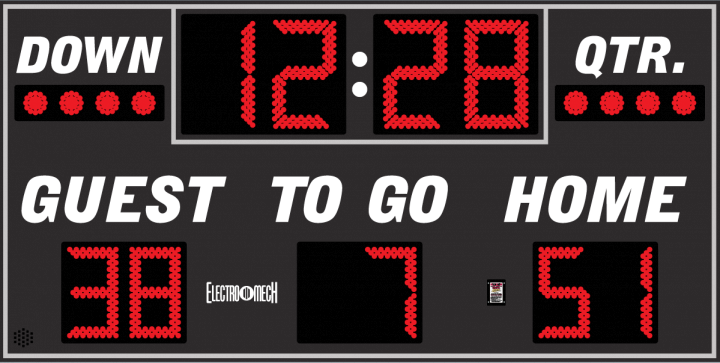
Football Play Clock Sets
Keep the game moving with portable or permanently mounted Play Clocks for Football -- available in three sizes.
Model LX3050 3-1/2 ft x 3-1/2 ft (each)
Delay of Game Timer, Snap Clock, 25-Second Timer.... It goes by many names. This one sets the standard for permanently installed displays.
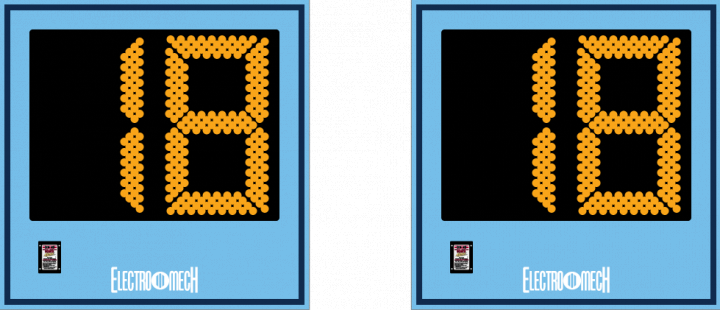
Model LX3070 4 ft x 4 ft (each)
This is the big one -- for professional facilities and stadiums that give the pros a run for their money.
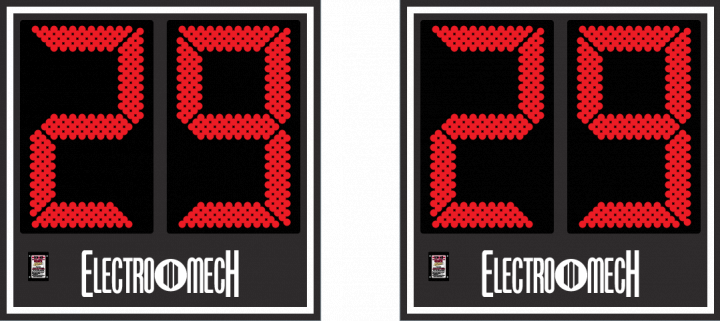
Model LX3018 3 ft x 3 ft (each)
Small and portable, but still easy to read
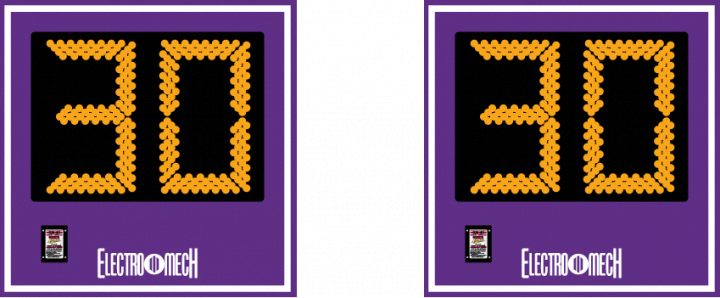
Model LX3024 3-1/2 ft x 3-1/2 ft (each)
Our standard Play Clocks in a portable package
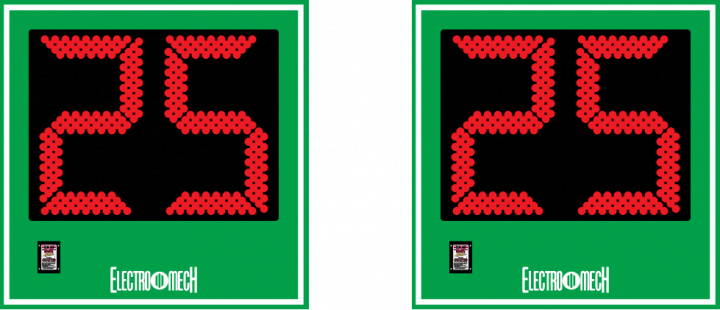
Model LX3030 4 ft x 4 ft (each)
Pro-sized, but still portable, these Play Clocks bring out the beast (and the best).
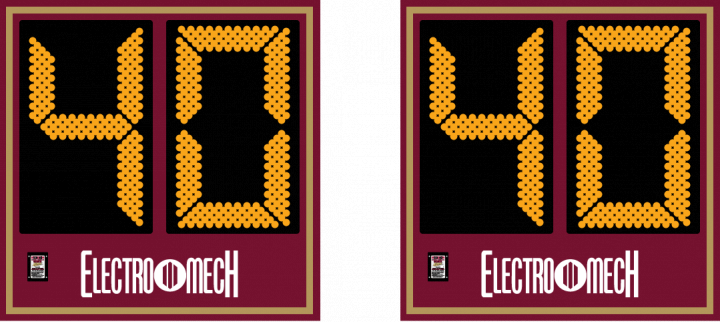
Practice Segment Timers for Football
Some games are won or lost on the practice field. Make the most of your practices with displays that put you in control.
Model LX7520 4 ft x 3 ft
Take control of practice, and roll this display away for secure storage when you are done.
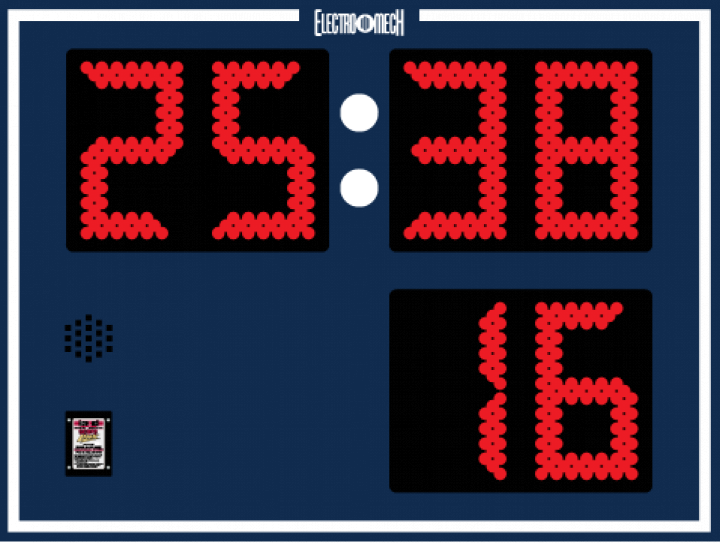
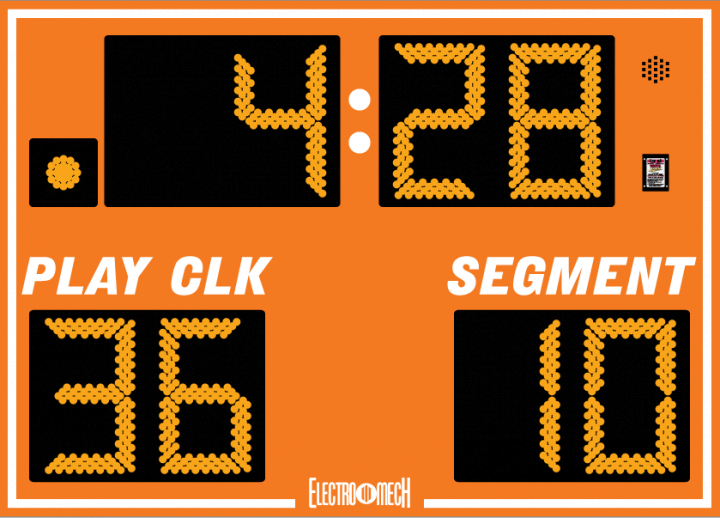
Model LX7620 5 ft x 3-1/2 ft
A comprehensive practice time scoreboard that includes a Play Clock feature -- all in a portable package.
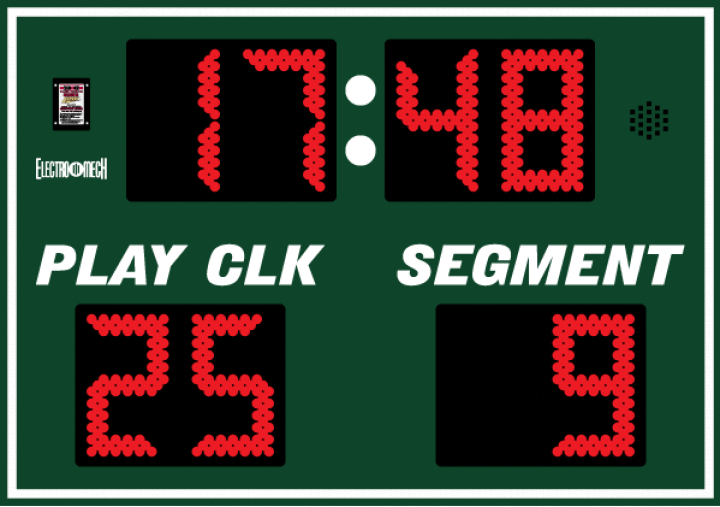
Model LX7640 7 ft x 5 ft
Designed for permanent installation on your practice field.
Multi-Sport Scoreboards with Football Features
Football season may be over before winter, but these scoreboards are just getting started.
Model LX3450 16 ft x 8 ft
When Baseball and Football are played on the same field, Model LX3450 keeps score.
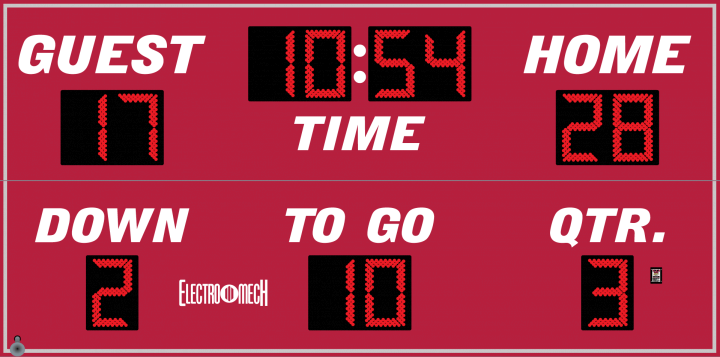
Model LX6324 5 ft x 3-1/2 ft
With a quick caption change, this portable scoreboard can handle Football, Baseball, Soccer, and more.
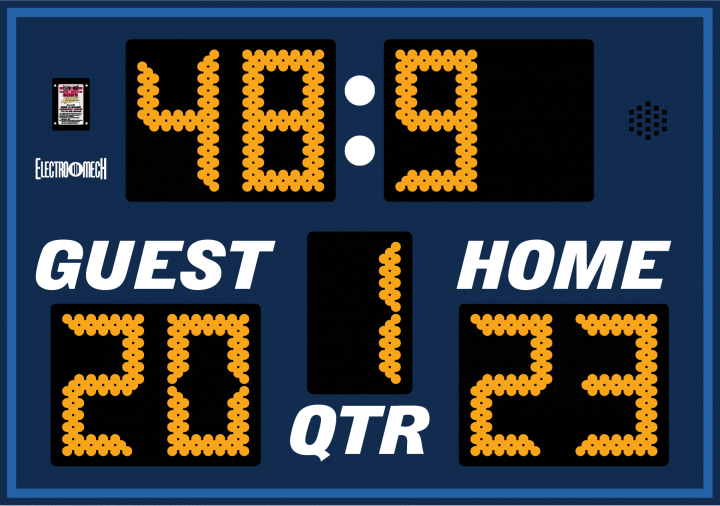
Model LX1320 5 ft x 4 ft
You need a portable scoreboard that can handle Baseball and Basketball? Here it is.
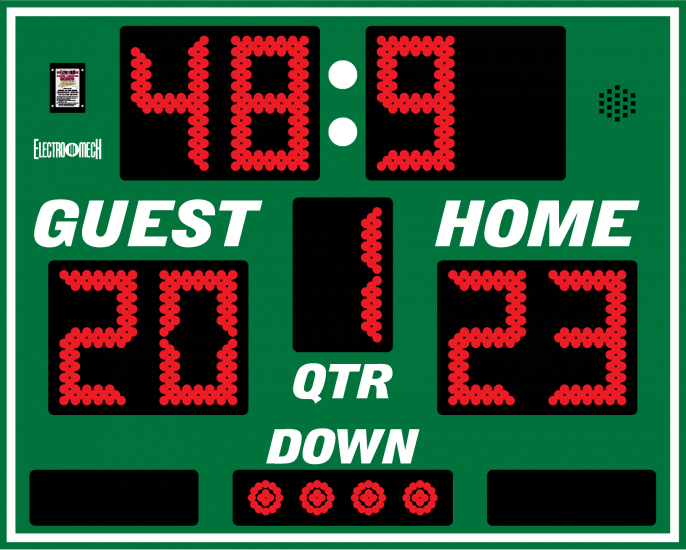
Model LX1360 10 ft x 5 ft
Model LX1360 is our most popular Multi-Sport scoreboard for use outdoors.
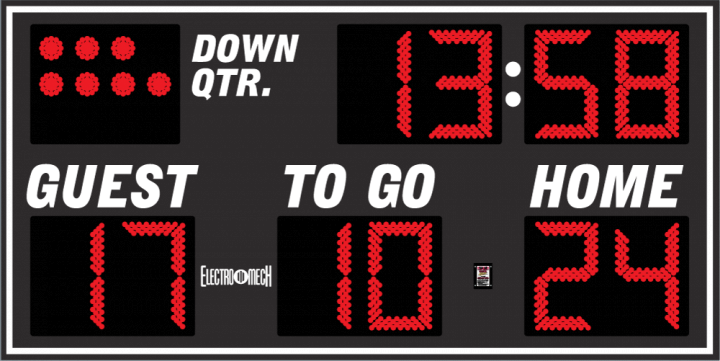
Model LX1390 14 ft x 5 ft
When Baseball season is over, this Multi-Sport scoreboard keeps working.
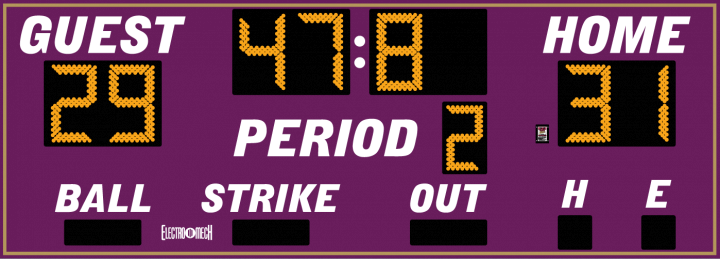
Model LX6360 16 ft x 5 ft
The information is basic, but the big 24-inch digits get the important points across.
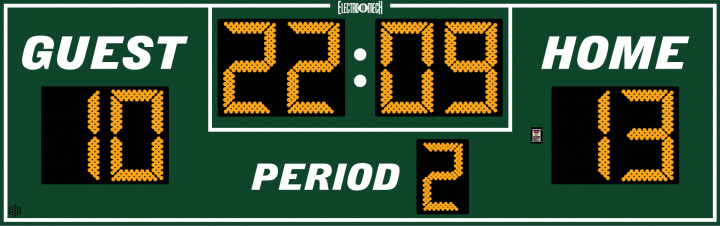
Model LX6370 18 ft x 9 ft
With a 30-inch tall Period Clock, you never have to ask the musical question, "Does anybody really know what time it is?"
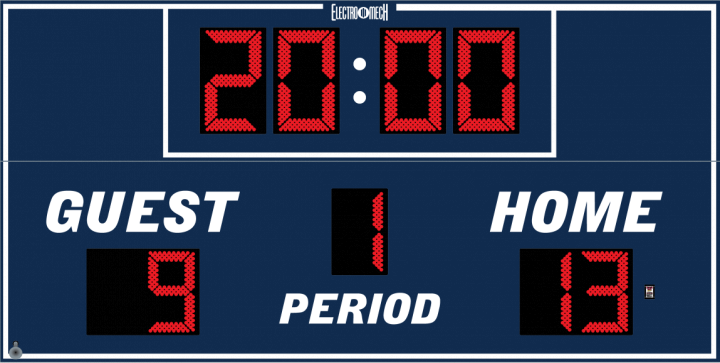
Soccer Scoreboards with Football Features
These Soccer scoreboards come fully loaded with support for American-style Football.
Model LX6434 16 ft x 5 ft
Changeable captions bring your Football game to the Soccer or Lacrosse field.
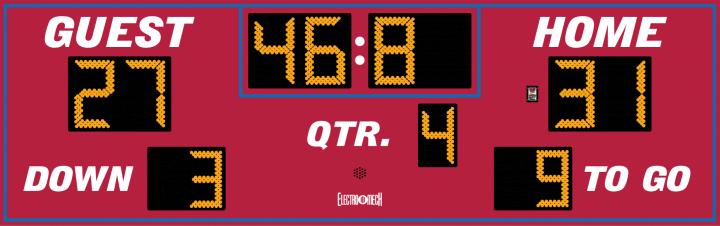
Model LX6436 16 ft x 5 ft
Features a 5-digit Timer and reversible captions
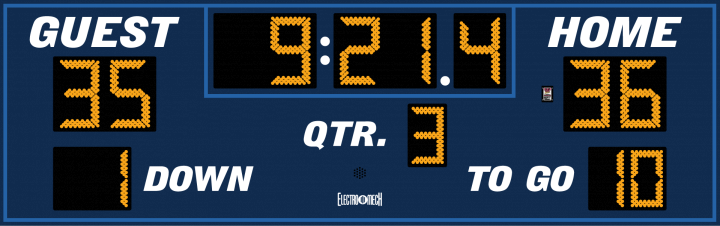
Model LX6544 22 ft x 8 ft
Soccer + Football = The best of both worlds
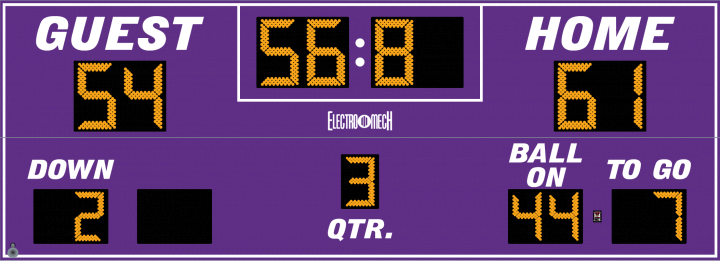
Model LX6546 22 ft x 8 ft
A Soccer scoreboard served with a side of American-style Football
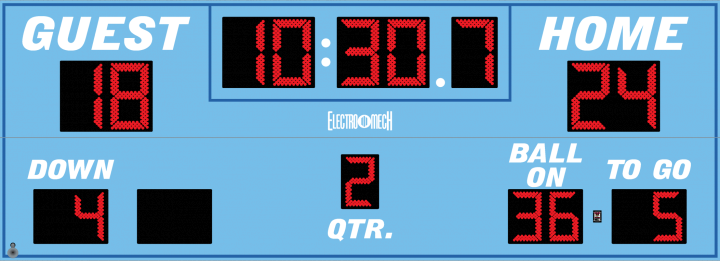
Model LX6744 26 ft x 8 ft
An impressive scoreboard for Soccer, with reversible captions for Football
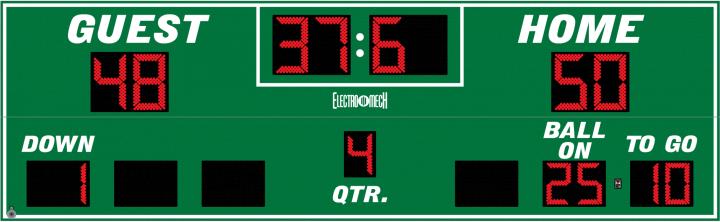
Model LX6746 26 ft x 8 ft
Soccer fans win big with this scoreboard -- and don't forget about the Football fans.
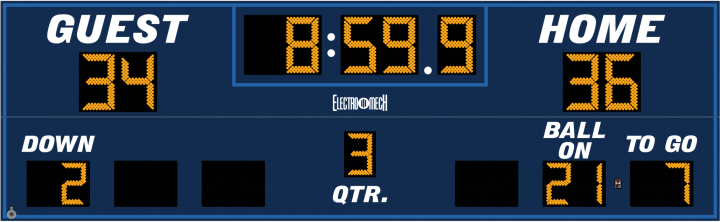
Model LX6944 26 ft x 8 ft
Based on our most complete Soccer scoreboard, this one handles Football too.
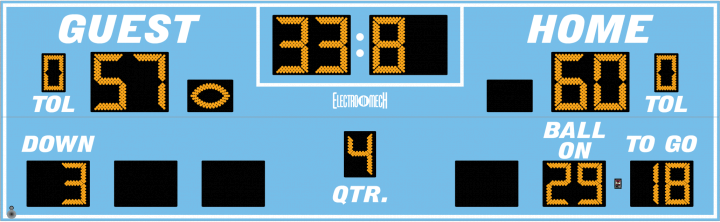
Model LX6946 26 ft x 8 ft
This may be the most feature-packed scoreboard in the Electro-Mech lineup.
Indoor Football Locker Room Clocks
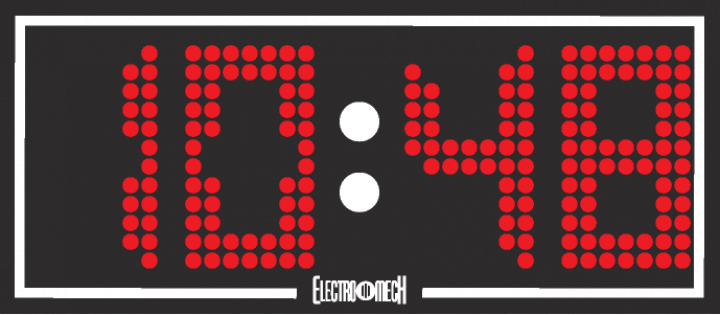
Keep up with the pre-game and halftime countdowns with these displays that duplicate the Time information showing on your main scoreboard display.
Model LX7406 23 in x 10 in
Whether you are counting down time between halves or leading up to the start of the game, this small display will duplicate the time shown on the main scoreboard.
Victory on the Football field is no small accomplishment. While the post-game celebration may include travel plans to a certain mouse-themed vacation area, there is another place most Players like to go immediately after the big win: To the scoreboard! The best photo op for members of the winning team is the one that records the final numbers for posterity. With this in mind, Electro-Mech's advice is this: Don't buy an ugly Football scoreboard!
While we offer a variety of handsome products to complement Football facilities of all sizes, one of our most popular new product lines is not typically used inside the stadium. The growing trend in recent years has been toward scoring solutions for the practice field. The secret is in Electro-Mech's control console software, which gives you the flexibility to design multiple custom practice schedules. The results can be displayed on your existing Football scoreboard or on a dedicated practice timer. We have portable models as well as options for permanent installation at fields which are specifically dedicated to practice.
Play Clocks are another type of Football accessory scoreboard showing a surge in popularity recently. While these two-digit timers have been common at pro stadiums and college facilities for years, Play Clocks are now required for some high school Football leagues and are often seen a rec park fields today. Electro-Mech offers five different Football Play Clock models. Three of these can be outfitted with our Portable Leg Kit, which gives you the option to roll away the Play Clocks for safe storage when the game is over.
Tough, Smart, and Dressed for Success
Rugged cabinet construction and long-lasting LEDs ensure that there is no more reliable scoreboard available than the Electro-Mech Football products featured on this page. Low-powered electrical components and our simplified installation system provide substantial savings over many competitors. We offer sixteen standard paint colors for the face of your scoreboard. In addition, you may specify almost any other color for a small up-charge. The scoreboard face looks even better outlined with a contrasting accent stripe — usually white or gold — to add pizazz. You also have a choice of Amber or Red super-bright LEDs to complete the perfect color combination.
ID Panels
To build out the perfect Football scoreboard package, add an ID panel or two… or more! An ID panel is an additional surface on which we can apply words (like your team's name or the name of the field) and images (like your team's mascot or the logo of an advertiser). Because most Football scoreboards are significantly wider than they are tall, Football ID panels are typically the same width as the scoreboard and are added above or below the scoreboard cabinet to increase total structure height. ID panels can be simple rectangles. They may incorporate half-circle elements for domed tops or longer arcs that yield arched tops. In addition, Electro-Mech can provide decorative truss structures to tie together the package visually and provide a sense of style. Contact us today, and one of our sales coaches can help you make the winning choice.
About Electro-Mech
If you've read this far down the page and are not a robot, then here is a reward for your efforts. If there were an E! True Hollywood Story of the history of Electro-Mech Scoreboard Company, it would tease you with hints of illegal gambling dens and late-night police-evading car chases. Nobody working at Electro-Mech was around to witness the actual events, so we just have hearsay pointing toward the juicier aspects of the story. What we do know is that the idea of creating a scoreboard manufacturing company started with some folks at Peach State Amusements in Macon, Georgia in the late 1950s or early 1960s. Part of the Peach State business included servicing pinball machines and slot machines. The fact that gambling was (and to a large degree still is) illegal in the state of Georgia meant that Peach State customers in possession of these mechanical bandits were either skirting along the edges of the law, or, in some cases, camped out on the other side of the line. Rumor has it that, in order to avoid the eyes of law enforcement officials, damaged machines would be loaded into an ambulance and driven to the Peach State facility in the dead of night. We don't know to what extent this practice was common — or even true — or if such drama was part of the motivation to move toward a business model that seemed less likely to result in jail time. But it certainly makes the story more interesting. Since you read it on the Internet, you know it's a fact.